Commercial & Residential Flat Roof Ponding Repair in Fort Collins, CO
24/7 flat roof ponding and membrane leak repair in Fort Collins, CO. TPO, EPDM, and modified bitumen triage, tapered insulation, and drainage restoration across Larimer County.
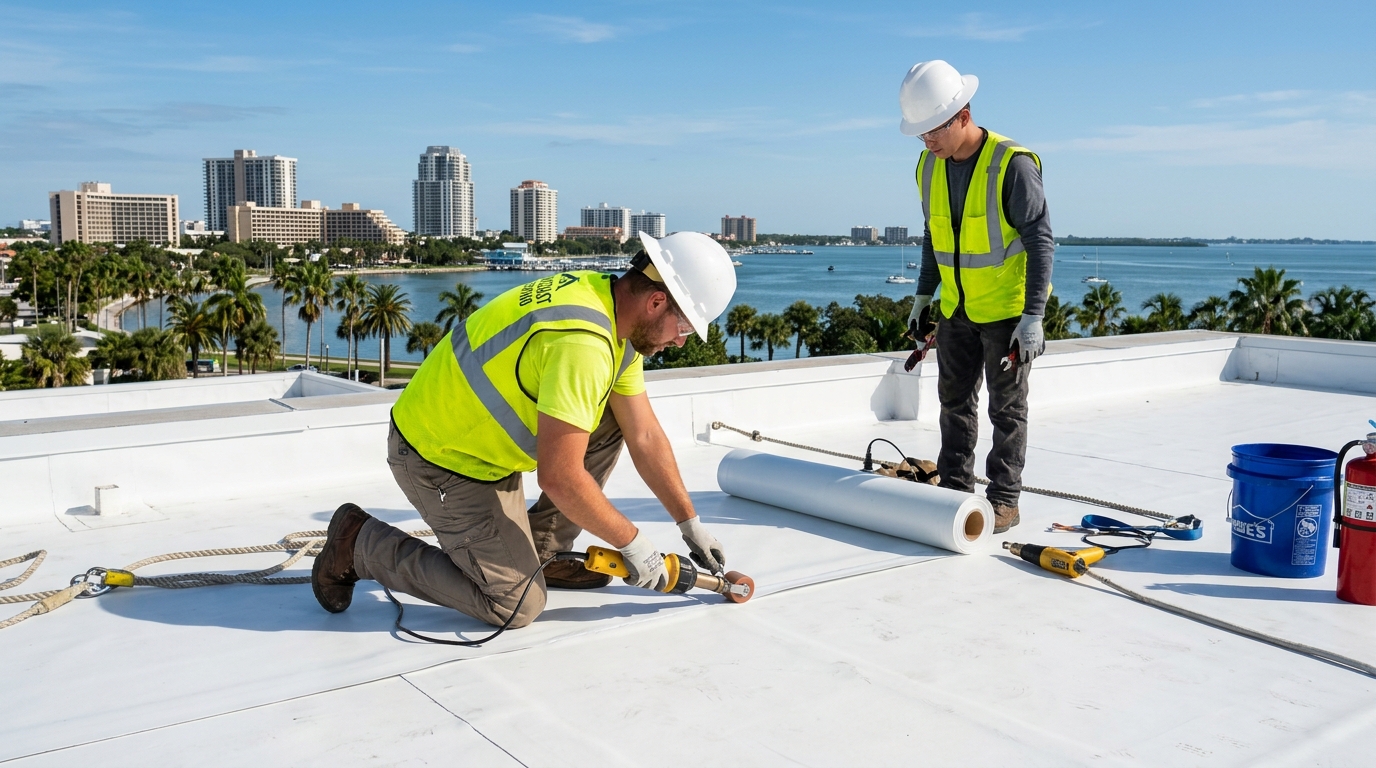
Precision Engineering for Low-Slope Drainage & Membrane Integrity
Flat and low-slope roofing systems - widely installed on mid-century residential homes, modern urban additions, commercial storefronts, and industrial complexes across Fort Collins - face severe weather challenges distinct from steep-slope shingle roofs. With minimal pitch to shed water, low-slope membranes rely on gravity, engineered scuppers, and positive slope gradients to evacuate rain and snowmelt. When architectural sagging, clogged drains, or compressed insulation create areas of standing water, ponding occurs. In Northern Colorado, ponding water freezes into massive ice sheets in winter and accelerates membrane breakdown in summer. Our 24/7 emergency dispatch service connects property owners with commercial-grade flat roof specialists who repair leaks, restore positive drainage, and reinforce damaged membranes.
Key Technical Engineering Protocols – Flat Roof Ponding Repair
- Rapid Emergency Triage: Direct telephone-to-technician dispatch across all Fort Collins, Loveland, and Larimer County zip codes with zero web form delays.
- Non-Destructive Moisture Tracing: Calibrated FLIR infrared thermography and electronic impedance scanners to isolate subterranean leaks without destructive deck tearing.
- High-Wind & Snow Compliance: Full conformance with 2021/2024 International Residential Code (IRC) R905 wind-resistance nailing and continuous ice-barrier provisions.
- Licensed Colorado Contractors: Vetted independent roofing professionals carrying verified active general liability and worker's compensation coverage.
- Transparent Carrier Documentation: Standardized forensic photo packets, Haag-methodology test square documentation, and Xactimate line-item estimates aligned with insurance adjuster guidelines.
1. The 48-Hour Ponding Threshold and Structural Strain
Under National Roofing Contractors Association (NRCA) standards, any water remaining on a low-slope roof 48 hours after precipitation ceases is classified as ponding. Standing water exerts tremendous structural dead load: one inch of standing water weighs approximately 5.2 pounds per square foot. Over a 400-square-foot depressed roof bay, this adds over one ton of concentrated weight to structural joists and decking, causing further deflection, deepening the depression, and creating a dangerous cyclic failure mode.
2. TPO, EPDM and Modified Bitumen Membrane Seam Diagnostics
Different flat roof membranes fail under distinct stress mechanisms. Dispatched contractors are certified across all low-slope technologies: (1) Thermoplastic Polyolefin (TPO), where high-altitude UV can embrittle unreinforced sheets and cause hot-air welded seams to lift; (2) Ethylene Propylene Diene Monomer (EPDM), where aged splice adhesive tapes degrade under ponding water immersion; and (3) SBS/APP Modified Bitumen, where granule loss and asphalt cracking allow moisture into underlying insulation. Dispatched crews conduct probe tests along all field seams and penetration flashings to identify compromised joints.
3. Tapered Polyisocyanurate Insulation and Positive Slope Remediation
Permanently eliminating ponding requires addressing the underlying slope deficiency. Dispatched contractors install custom-cut tapered polyisocyanurate (polyiso) rigid foam insulation crickets and saddles to channel water toward existing roof drains and parapet scuppers. By elevating low depressions with 1/4-inch per foot slope slopes, water evacuates rapidly, preventing thermal shocking and winter freeze-thaw seam rupture.
4. Scupper, Parapet Wall and Internal Drain Rehabilitation
Low-slope roof leaks frequently originate at perimeter terminations rather than the open field. Parapet wall flashings, collector boxes, and through-wall scuppers must be reinforced with heavy-duty metal coping caps and reinforced membrane boots. Dispatched crews inspect internal roof drains for blockages, test clamping rings for compression seal integrity, and install heavy-duty cast-iron strainer domes to prevent foliage from choking drainage systems during severe Front Range storms.
5. Thermal FLIR Scans for Saturated Insulation Detection
When a low-slope membrane leaks, water spreads horizontally within the underlying insulation layer for tens of feet before dripping into interior ceilings. Dispatched technicians perform non-destructive evening FLIR thermal scans. Because wet insulation retains solar heat longer than dry insulation, nighttime infrared cameras display saturated roof sections as bright thermal anomalies, allowing targeted surgical repairs without costly, unnecessary full roof tear-offs.
Need Immediate Assistance with Flat Roof Ponding Repair in Fort Collins?
Zero forms, zero waiting. Connect directly with an emergency roof dispatch specialist to route licensed Larimer County crews to your property.
CALL NOW: (888) 208-4155Frequently Asked Questions – Flat Roof Ponding Repair in Fort Collins
Why is standing water dangerous on my flat roof in Fort Collins?
Ponding water adds substantial weight that deflects roof framing, accelerates ultraviolet chemical degradation of the membrane, and in winter freezes into expanding ice sheets that split seam welds and cause severe structural leaks.
How do technicians fix low spots on a flat roof without tearing it all off?
Skilled roofers can install tapered polyisocyanurate insulation saddles or crickets directly over sound, dry existing decking, creating an engineered slope that diverts water to drains before applying a new heat-welded or fully adhered cap membrane.
What flat roofing material is best suited for Fort Collins weather?
Thermoplastic Polyolefin (TPO) and heavy-gauge EPDM rubber are the most popular choices in Northern Colorado. TPO reflective surface reduces summer cooling loads and offers heat-welded seams that resist high-altitude UV, while EPDM provides outstanding flexibility during extreme winter freeze-thaw cycles.